The Future of Braille: A Conversation with Yue-Ting Siu

By Connor Scott Gardner, blind writer and assistive technology user
When Yue-Ting Siu talks about Braille, there is no hesitation. "So long as print is important and of value in a sighted society, Braille will always hold equal value for a non-visual culture," she said when we spoke.
Siu has worked as a Teacher of Students with Visual Impairments since 2006. Over the years, she has watched tools and attitudes change, while her core philosophy has not. "I always believed in equitable access to information," she explained. "That comes from my own personal experience being first generation of immigrant parents and seeing the differences in how information accessibility changes the power dynamic among different groups."
While studying for her credential, it became clear to Siu that technology has the power to equalise access for blind and low vision students. Since then, she has watched accessibility features spread from specialist devices into mainstream platforms. Captioning, text-to-speech and screen readers are no longer niche. "The Swiss Army knife of access tools has gotten a lot bigger," she said.
I have seen the same shift in my own work and experience as a blind user of assistive technology. A decade ago, Windows Narrator was almost unusable. Today, while it is not the screen reader of choice for the majority of blind people, it is powerful enough to set up a computer independently. That kind of change makes a huge difference, as it makes a basic screen reader available to anyone with a Windows machine, particularly those who may not yet have the knowledge to seek out more feature heavy options.
Braille as a Last Resort
Despite the progress that has undoubtedly been made, Siu is concerned by how Braille is taught. Legally, in the United States, Braille is the default medium of literacy for students with visual impairments. Schools must prove it is not appropriate. In practice though, it is often introduced only after students exhaust all other options. "I have observed many, many times over that it's considered the last resort," she said.
This reluctance has consequences. Low vision students may be encouraged to rely on print, even when it causes fatigue and discomfort. "If they were to have really good Braille instruction and Braille access, perhaps their cognitive load actually might be lessened," she explained.
Some teachers delay introducing technology until students are fluent in Braille. Siu sees this as a mistake. "That is the biggest pitfall that you could potentially fall into," she said. "We have to get people excited about Braille, and technology can make Braille more easily accessible."
Technology and Braille Together
I asked her what that might look like in a real classroom setting. How can we combine braille and technology, and what are the dangers of failing to do this. She gave the example of a highly academic student she taught during the pandemic. He had excellent Braille skills but no experience with technology. Bringing in devices expanded his world and reinforced his Braille learning. "I could build upon his foundation of Braille, but I could also take his Braille foundation to the next level."
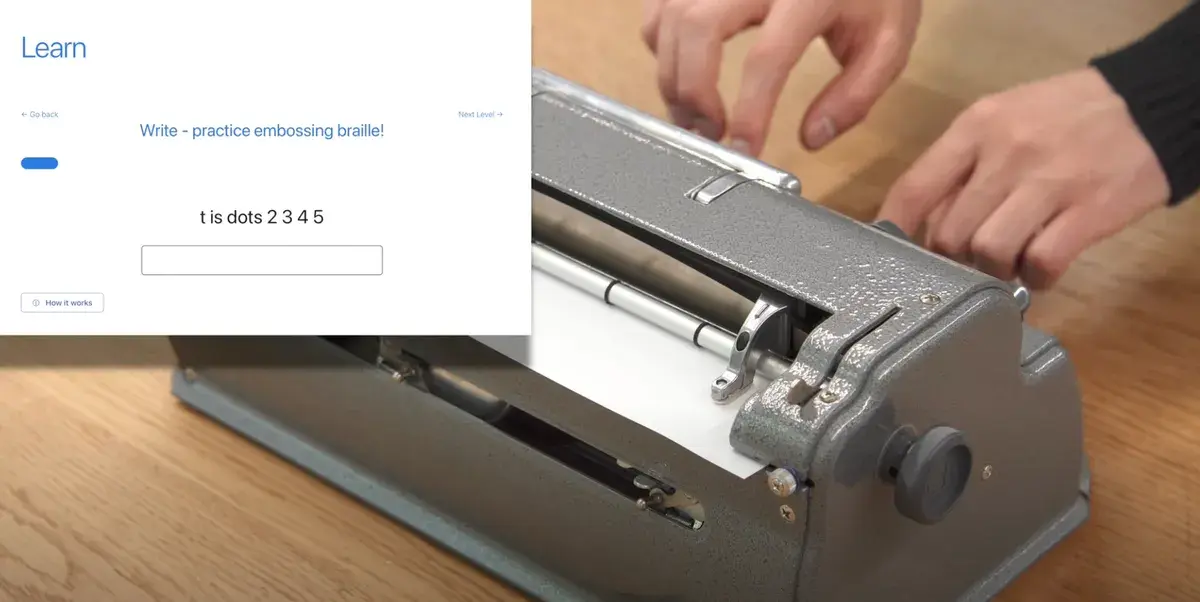
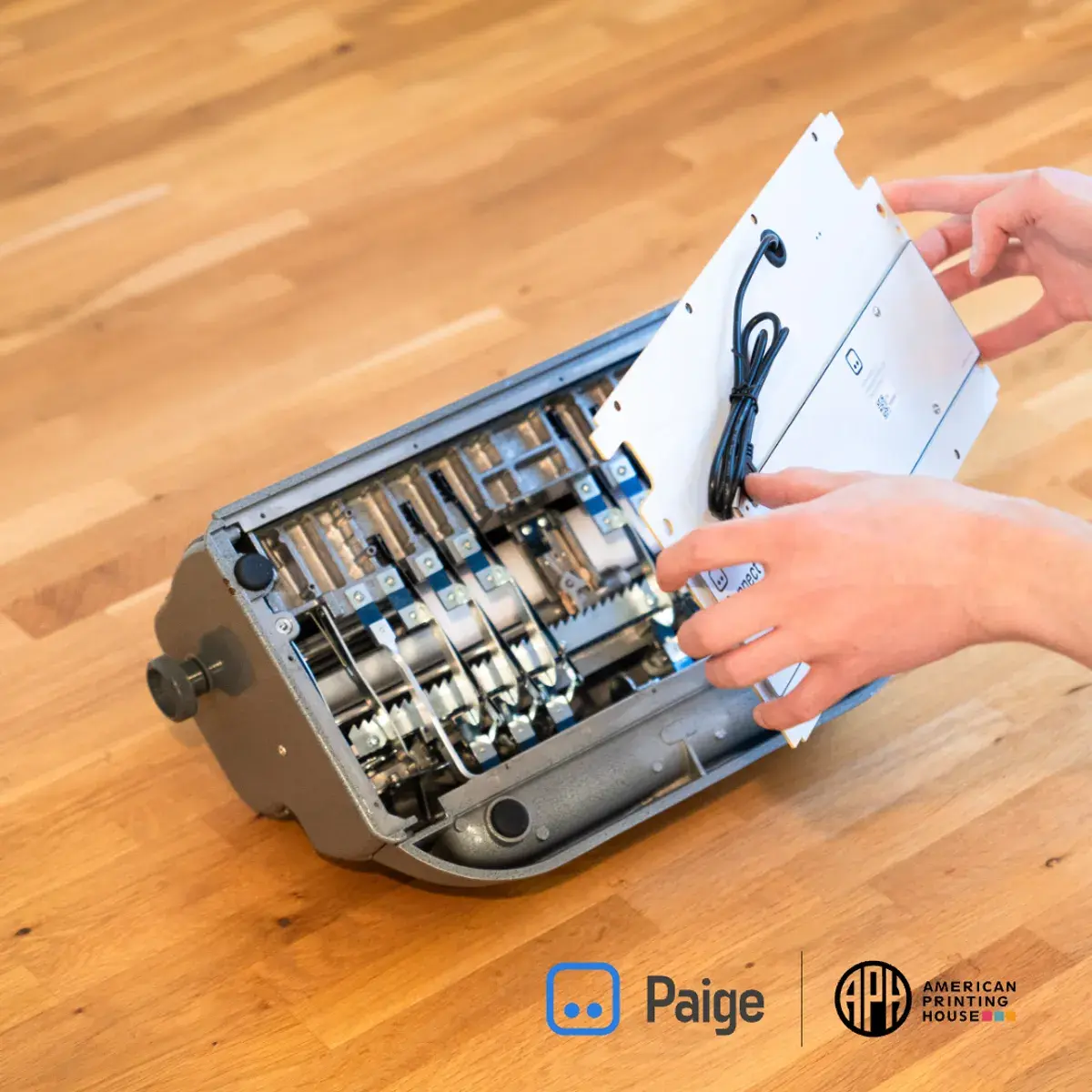
Siu is also concerned that some TVIs want to teach braille but are concerned about their ability to teach it. Lacking confidence in their own braille skills may mean they are less comfortable introducing it to blind students. Technologies like the Paige connect aim to address these barriers, combining technology with the Perkins brailler. I asked whether products like this have the potential to overcome some of the difficulties we are seeing in educational settings. "The built in learning platform is really incredible. And hopefully, because it's going to make Braille instruction and Braille learning so much easier, it will hopefully make Braille easier for those teachers who would otherwise be intimidated at the thought of having to teach Braille."
Creating Braille-Rich Environments
We frequently found ourselves returning to the idea of early braille exposure, and how braille-rich environments can be created for blind children, who are not automatically surrounded by it as sighted children are with print. As a young teacher at the Jewish Guild for the Blind, she created a "tech room" for preschool children. They were not yet reading, but they could explore Braille displays, computers with screen readers and tactile graphics. The goal was to make technology and Braille part of their everyday environment, just as sighted children see print all around them.
I have seen the same principle play out with sighted children. My nephew could use an iPad before he could read. For blind children, early contact with Braille and access technology can create that same sense of familiarity and possibility.
Beyond Words: Graphics and Images
Literacy is more than words. "Far too often, our little Braille readers are getting books that are only in Braille and no graphics. And that's terrible, because how many children's books do you see with no pictures?" Siu asked.
Well-designed tactile graphics can make the difference between a purely functional text and one that engages a child's imagination. She pointed to examples from Touch Graphics and the American Printing House for the Blind, which integrate textures and interactive elements into their books. The involvement of blind people in the design process is essential, she added, to ensure that graphics work as intended.
At museums, I have noticed that tactile maps draw attention not just from blind visitors but also from sighted ones. People instinctively want to touch. The challenge is producing graphics that do more than look interesting: they must communicate information clearly through touch.
The Role of AI and Future Technology
Looking ahead, Siu sees value in both old and new. Low-tech tools such as Perkins Braillers remain indispensable. At the same time, innovations such as the Monarch multi-line Braille display can open up access to information that blind people have traditionally had minimal access to. "This is really the signal of the next big evolution in access technology," she said.
It is hard to talk about technological developments without mentioning AI. From recognising text in photos to asking for detailed descriptions of your surroundings, AI could broaden non-visual access. But she cautions against adopting technology for its own sake. "Technology only exists in the service of something else. It should never exist just to be a device that exists," she said.
We are all wrestling with the evolution of AI and considering where it might be useful. For blind people, it is easy to see AI as a savour of sorts, giving us access to information in quantities that were previously unfathomable. I can walk out of my house, take a photo on my phone, and immediately get an AI generated description of my surroundings. But is that always a good thing? As blind people, it is easy to get excited about these technological developments, but the irony of the information deprivation we experience is that we are unable to verify whether the AI-generated descriptions are correct. "I feel like people get excited about new tech without really thinking critically about whether or not it's a good fit for our students," Siu said. This is perhaps the right balance, to allow ourselves to feel excited, both as users and educators, but to also think critically about the shortcomings of the technology.
A Vision for the Future
Despite these pitfalls, Siu believes the future is bright. Her vision is of a future where Braille and technology are present and available to all blind people. "Why not have Braille displays everywhere, or a Braille display accessible with every public computer?" Siu also believes that technology may also enable blind people to expand our work in areas which were previously less accessible. "I think the way technology is moving, it's going to better situate blind people as designers and creators in a way that has not been possible before. Possible, but not as easily possible in that revision and drafting process."
For Siu, the goal is not to replace print or to treat Braille as an emergency option. It is to ensure that blind and low vision people have access to literacy in all its forms, from children's books with pictures to university essays embossed at the press of a button.
About This Article
This article was written by Connor Scott Gardner, a blind writer and advocate for accessible technology. Paige is proud to support diverse voices in the braille and accessibility community.